A Practical Guide to Managing Farm Crews at Scale
How transitioning to a digital system for worker onboarding and payroll can unlock your ag business' potential
By Erin Pfund
A Practical Guide to Managing Farm Crews at Scale
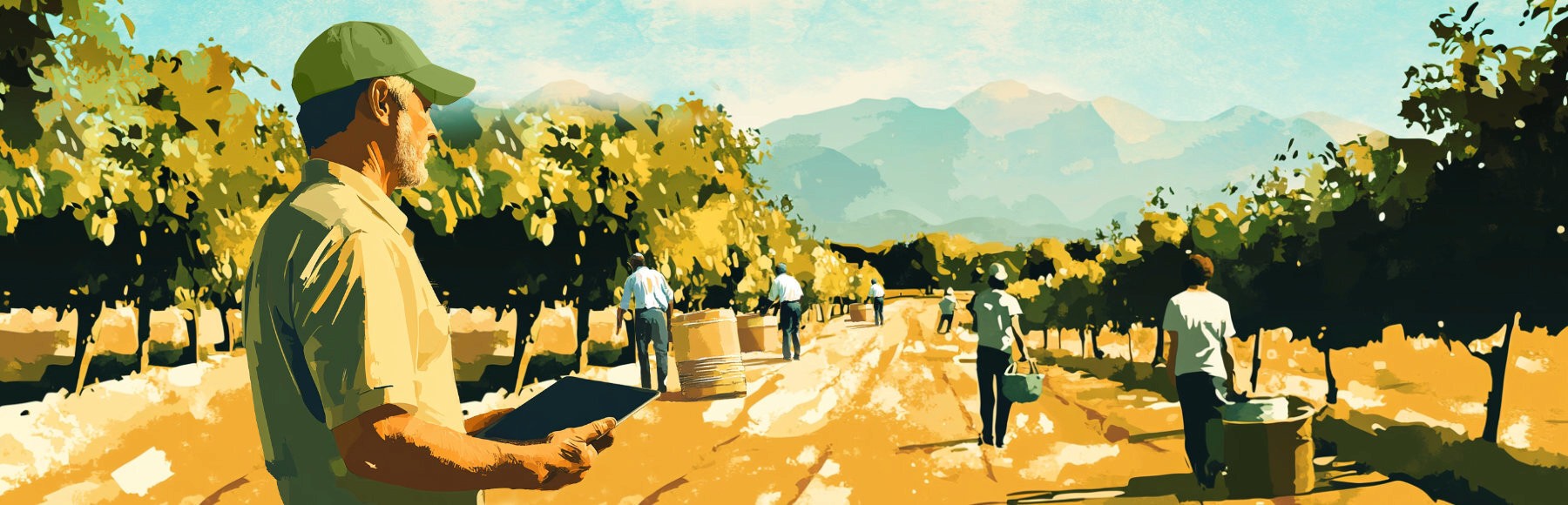
If you're managing a farm crew—whether that's 20 workers or 200—you probably recognize this scene: worker information lives in a filing cabinet or a three-ring binder. Timesheets get collected on paper at the end of each week. You enter payroll into a spreadsheet, double-check the math, then manually input everything into your payroll system, like Quickbooks, for example. Onboarding paperwork sits in manila folders. When someone asks "Who were our best workers last season?" you're flipping through notes and relying on memory.
This system works when absolutely everything goes right. But as you grow—adding more crews, managing more acres, hiring more seasonal workers—the cracks start to show. Payroll takes longer every season. You're worried about staying compliant. And you know you're not making the smartest hiring decisions because you don't have good data from previous years.
The good news? You don't need to stay stuck with paper and spreadsheets. Farms of all sizes are making the jump to digital systems and seeing dramatic improvements: payroll time cut by 90%, better compliance documentation, and the ability to actually use their data to make smarter decisions year after year. This guide will show you how to make that transition, no matter what size operation you're running.
Why Paper Systems Stop Working as You Grow
Many farm operations start with paper and spreadsheets because it's simple and familiar. You don't need to learn new software or change how you've always done things. For a small crew, this approach can work fine—you know everyone's name, you can track their hours on a clipboard, and payroll is manageable.
But as your operation grows, the problems multiply faster than the workers:
The time sink grows as workers do: What took an hour to process payroll for 10 workers now takes four or five hours for 50 workers. You're spending entire days on administrative work that could be automated.
Errors become expensive: When you're manually entering hundreds of hours and calculating piece rates by hand, mistakes happen. An error in piece rate calculations or minimum wage compliance can trigger penalties, back pay, and even audits. A recent GAO analysis of Department of Labor investigations from 2018 to 2023 showed that 84% of operations had violations, and a majority of violations–42%–were related to payroll. That’s an unnecessary way to make payroll more expensive.
You can't make strategic decisions: With paper records, you can't easily answer questions like "Which workers had the best productivity last season?" or "Which crew leaders have the lowest turnover?" That knowledge exists somewhere across your files, but it's not actionable.
Compliance becomes a liability: When the Department of Labor shows up for an audit, you're scrambling through filing cabinets hoping you have all the I-9s, pay records, and documentation they need. This takes days or weeks to organize, and missing or incomplete records can result in serious penalties.
The farms that scale successfully recognize that paper systems don't fail suddenly—they fail gradually, creating more work and more risk with each additional worker you hire.
Start with One Change: Digital Worker Onboarding
You don't need to overhaul your entire operation overnight. The easiest first step is digitizing how you bring workers on board. Instead of printing out forms for workers to fill out by hand, you have them complete onboarding on a tablet, or better yet, on their phone before they even arrive.
Why this matters: Digital onboarding creates clean, structured data from day one, and serves as a system of record for your operation. No more trying to read someone's handwriting. No more chasing down incomplete forms. No more losing paperwork between the field and the office. Every worker's information—contact details, emergency contacts, tax forms, I-9 documentation—is captured correctly and stored in one place. For tools that integrate with E-Verify, like Seso, you can also have the E-Verify case numbers automatically added right on the I-9.
This single change saves time immediately. But more importantly, it creates a foundation you can build on. Once worker data is digital, adding other tools becomes much easier because you're not starting from scratch.
How to implement it: Start with your next group of seasonal hires. Set up a tablet station during onboarding where workers can complete their paperwork digitally. Most workers, even those who aren't tech-savvy, can navigate a simple form on a tablet with minimal guidance. For workers who speak Spanish, make sure your system offers Spanish-language forms.
Want guidance on how you can get started? Contact Seso to speak with an expert today.
Stop Losing Time on Manual Payroll
If you're currently collecting paper timesheets, entering hours into a spreadsheet, calculating piece rates by hand, and then manually inputting everything into QuickBooks (or whichever payroll software you may be using), you know exactly how much time this takes. For many operations, payroll processing is a multi-hour ordeal every single week during peak season.
Agricultural payroll is uniquely complex: You're not just tracking hourly wages like an office job. You're calculating piece rates, ensuring everyone meets minimum wage requirements, tracking workers across different tasks and locations, managing crew-based pay structures. Generic payroll systems—or worse, manual spreadsheets—force you to handle all this complexity yourself.
The right digital payroll system handles these calculations automatically:
Piece rates are calculated based on production data
The system automatically checks that piece rate workers met minimum wage requirements
Workers who move between tasks or crews during the week have their time properly allocated
Payroll reports are generated automatically, ready for your accountant
Real impact: Operations that switch from manual to digital payroll report cutting their processing time from 4-5 hours per week down to 30 minutes or less. That's not just about saving time—it's about reducing errors, improving accuracy, and freeing yourself up to focus on running your farm instead of pushing paper.
Modern systems also make life easier for workers. They can receive direct deposit, access digital pay stubs on their phones, and see their hours in real-time. This reduces the constant stream of questions about pay and creates more trust and transparency.
Make Your Data Actually Useful
Here's a question: Can you quickly pull up a list of your best workers from last season? Can you see who had attendance issues, who was most productive, which workers shouldn't be placed on the same crew together?
If you're working with paper and spreadsheets, the answer is probably no. That information might exist somewhere in your notes or in a supervisor's memory, but it's not actionable data you can use to make decisions.
When your worker information lives in a digital system, everything changes: You can tag workers based on performance, add notes about crew dynamics, track productivity across seasons. When you're planning for next year, you're not starting from zero—you have real data about who to bring back, who to prioritize, and how to structure your crews for success.
This becomes a compounding advantage. Every season, you're making slightly better hiring decisions. You're bringing back your best people. You're avoiding workers who caused problems. You're learning which crew combinations are most productive. Over time, this data intelligence becomes one of your competitive advantages.
Stay Compliant Without the Stress
Compliance might not be the most exciting topic, but it's one of the most important. Department of Labor audits can happen with little warning, and when they do, you need to produce complete documentation: I-9s for every worker, accurate pay records, proof that everyone met minimum wage requirements, records of any disciplinary actions.
With paper systems, audit preparation is panic: You're digging through filing cabinets, searching for documents, hoping nothing is missing. Even when you find everything, organizing it takes days of work.
Digital systems eliminate this stress. Every document is stored in one place, properly organized. When you need to pull an audit file, you download it from the platform. Instead of scrambling under pressure, you're simply accessing the records you've been maintaining all along.
Good systems also help you stay compliant proactively, not just reactively:
Automated reminders ensure I-9 reverifications happen on time
Payroll compliance checks flag potential issues before you run payroll
Digital audit trails automatically document every change and decision
This isn't just about avoiding penalties. It's about running your operation with confidence, knowing your records are complete and organized.
What to Look for in Farm Management Software
If you're ready to move beyond paper and spreadsheets, choosing the right system matters. The biggest mistake agriculture business owners make is picking generic HR or payroll software that wasn't built for agriculture. These systems don't understand piece rates, seasonal workforces, or crew-based management. You'll end up paying for software that still forces you to maintain spreadsheets on the side and doesn’t reduce your mental load or free you up to focus elsewhere.
Look for systems built specifically for agriculture that include:
Agricultural payroll expertise: Piece rate calculations, rate-to-minimum wage compliance, and crew-based tracking built in
All-in-one approach: Onboarding, timekeeping, payroll, and compliance in one place (not multiple systems you have to integrate)
Mobile accessibility: Workers should be able to access pay stubs and information from their phones
Spanish language support: Many farm workers speak Spanish as their primary language
Real support: When you have questions, you need to talk to people who understand agriculture, not a generic call center
The right system should make your life easier from day one, not create a months-long implementation headache.
Making the Transition: Start Small, Build Momentum
The prospect of changing systems can feel overwhelming, especially during peak season. The key is you don't have to do everything at once.
Start with what's causing you the most pain: If payroll processing is eating up your time, start there. If you're worried about compliance and missing documents, start with digital onboarding. Pick the area where you'll see immediate benefit.
Time your transition smartly: Many farms make changes during the off-season or at the start of a new quarter, when there's a natural break in workflow. This gives you time to learn the system without the pressure of peak season.
Expect a learning curve—but a short one: Any new system takes time to learn, but good agricultural software is designed to be intuitive. Most operations are up and running within a few weeks, and the time savings start immediately.
The farms that successfully make this transition share a common realization: staying with paper and spreadsheets isn't actually the "safe" choice. It's risky. You're accumulating compliance liability, wasting time on manual processes, and missing opportunities to make better decisions with your data.
From Paper to Strategic Advantage
Managing farm crews at scale doesn't have to mean drowning in paperwork and spending hours on administrative tasks every week. Whether you're managing 25 workers or 250, the right systems let you focus on farming instead of data entry.
The transformation doesn't require a complete overhaul overnight. It starts with recognizing that paper and spreadsheets have limits, and those limits get more expensive as you grow. Digital systems aren't just about efficiency—they're about reducing risk, improving compliance, and making smarter decisions with real data.
Operations that make this shift consistently report the same benefits: dramatically less time on payroll, better compliance documentation, and the ability to actually use their worker data to build better teams year after year. That's not just working faster—it's working smarter.
Ready to move beyond paper and spreadsheets? Learn how Seso helps farm operations of all sizes manage their domestic workforce with tools built specifically for agricultural labor management—from onboarding and payroll to compliance and crew management.
Categories: Labor Management
Share this article
No previous articles.
No newer articles.
Disclaimer: The information provided on this blog is for general informational purposes only. All information on the site is provided in good faith, however, we make no representation or warranty of any kind, express or implied, regarding the accuracy, adequacy, validity, reliability, availability, or completeness of any information on the site. Under no circumstance shall we have any liability to you for any loss or damage of any kind incurred as a result of the use of the site or reliance on any information provided on the site. Your use of the site and your reliance on any information on the site is solely at your own risk.
The blog may contain links to other websites or content belonging to or originating from third parties or links to websites and features in banners or other advertising. Such external links are not investigated, monitored, or checked for accuracy, adequacy, validity, reliability, availability, or completeness by us. We do not warrant, endorse, guarantee, or assume responsibility for the accuracy or reliability of any information offered by third-party websites linked through the site or any website or feature linked in any banner or other advertising. We will not be a party to or in any way be responsible for monitoring any transaction between you and third-party providers of products or services.
Ready to learn more?